Most homeowners plug in an air purifier and forget about it, until the unit stops working as hard as it should. The truth: air purifier filters don’t last forever, and running a purifier on a clogged filter is like vacuuming with a full bag. It’s not cleaning anything: it’s just moving air around. Knowing when to replace your filters, understanding the different types, and learning how to source replacements affordably can save hundreds of dollars annually while keeping indoor air quality where it needs to be. This guide walks through the signs, timelines, filter types, and real cost-cutting strategies that actually work.
Table of Contents
ToggleKey Takeaways
- Air purifier replacement filters typically last 6–12 months for HEPA filters and 3–6 months for activated carbon filters, depending on indoor air quality and usage patterns.
- Watch for reduced airflow, musty odors, unusual fan noise, and visual darkening as signs your air purifier filter needs replacement immediately.
- Use subscribe-and-save programs, bulk ordering, and pre-filters to reduce annual costs while extending filter life by 2–4 months.
- Always verify your purifier’s model number and buy OEM or certified replacement filters from the manufacturer to prevent air leakage and ensure proper sealing.
- Running your air purifier strategically on high during peak pollution times rather than 24/7 significantly extends filter lifespan and reduces replacement frequency.
- Combining HEPA and activated carbon filters is essential if odors or gases are concerns, but HEPA alone suffices for particle-only filtration needs.
Signs Your Air Purifier Filter Needs Replacement
The first warning sign is usually reduced airflow. If the fan sounds the same but air velocity feels weaker, the filter is likely clogged. Some units have a filter indicator light or display that alerts you, pay attention to it. Don’t assume it’s guessing: modern sensors track particle accumulation pretty accurately.
Another telltale is odor. A musty, stale smell coming from the unit means the filter has trapped moisture and organic matter that’s beginning to break down. That’s not a cleaning opportunity: it’s a replacement signal. Activated carbon filters turn this smell into a literal stink, while HEPA filters hold moisture and become breeding grounds for mold and bacteria if left too long.
Listen for rattling or unusual noise from the fan motor. A clean filter lets air pass smoothly. A clogged one forces the motor to work harder, which can cause vibration or strain sounds. If the filter is that restricted, it’s overdue for a swap.
Visual inspection is fast: open the unit and look at the filter. A white HEPA should still look relatively white or light gray. If it’s dark brown or black, it’s full. Activated carbon filters darken naturally, so they’re harder to gauge by sight alone, but if dust piles up on the surface, replacement time is near.
How Often Should You Replace Your Air Purifier Filter?
The honest answer depends on environment and usage. A typical HEPA filter in a home with average indoor air quality lasts 6 to 12 months. If you live on a busy road, have pets, or run the unit 24/7, expect the lower end, sometimes even 3 to 6 months. Activated carbon filters usually last 3 to 6 months because they absorb odors and gases faster than they capture particles.
The unit’s manual gives a guideline, but that’s often optimistic. Real-world performance hinges on air quality. During wildfire season or if you live somewhere with high pollen counts, you’ll replace filters more often. Same applies if anyone in the household smokes or if the unit sits in a dusty basement workshop.
Pro tip: mark your filter installation date on a calendar or set a phone reminder for six months out. Check it monthly. This prevents the “I can’t remember” scenario and catches a clogged filter before it tanks performance. Some newer units sync with apps and send notifications, lean on that if your purifier offers it.
HEPA Filters vs. Activated Carbon Filters: Which Ones Do You Need?
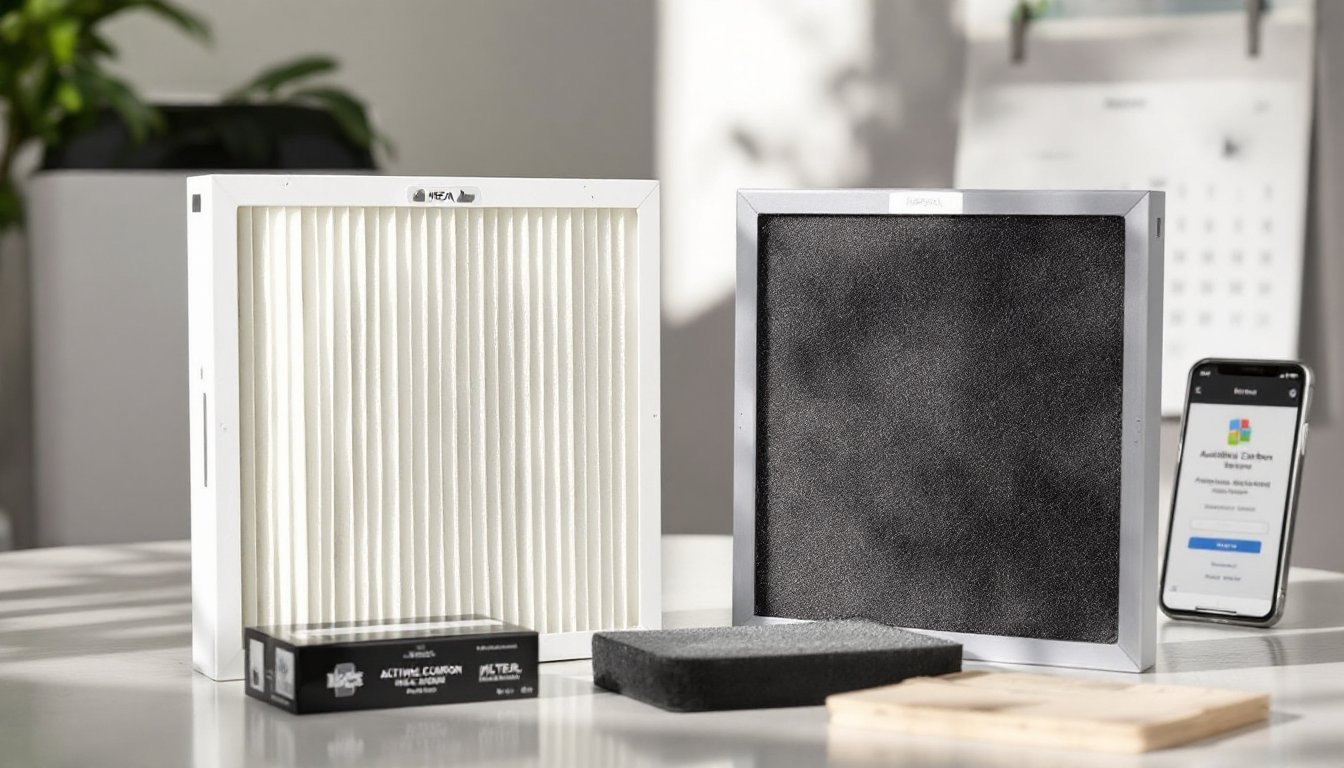
HEPA filters (High-Efficiency Particulate Air) capture 99.97% of particles 0.3 microns or larger, dust, pollen, pet dander, mold spores, and fine particulates. They’re the workhorse of air purification and handle the bulk of filtration. Most units include a primary HEPA stage. They don’t absorb odors or gases, so they won’t eliminate cooking smells or cigarette smoke.
Activated carbon filters are porous material treated to absorb gases and volatile organic compounds (VOCs). They remove odors, cooking fumes, and some chemical off-gassing from new furniture or flooring. They don’t capture particles, that’s why they’re paired with HEPA, not used alone.
Do you need both? If you care about particle filtration only (allergies, asthma, dust sensitivity), a quality HEPA filter alone gets the job done. If odors matter, pets, cooking, nearby traffic, or chemical sensitivities, add activated carbon. Most mainstream air purifiers sold today bundle both stages. Check your unit’s spec sheet to confirm what you have.
Cost-wise, HEPA filters run $25 to $75 depending on size and brand. Activated carbon pre-filters (the cheaper preliminary stage that extends HEPA life) cost $10 to $25. Full activated carbon cartridges run $20 to $60. Buying both upfront makes sense if your unit supports it, because running HEPA alone against smell-producing environments shortens HEPA life quickly.
Finding the Right Replacement Filter for Your Model
This is where many DIYers stumble. Buying the wrong filter wastes money and leaves a gap in your sealing, which lets unfiltered air bypass the stage entirely. Start by finding your purifier’s model number, usually on the back or bottom of the unit or in the manual.
Check the manufacturer’s website first. They list exact filter part numbers and often sell direct or via authorized retailers. Don’t assume a filter from another brand fits, even if dimensions look close. Air purifiers rely on precise fit to prevent air leakage around the filter edges.
If the original is discontinued, use that model number to search compatibility on retailer sites like Amazon or Walmart. Many third-party filters list compatible models in their product description. Read customer reviews specifically for fit and performance, “doesn’t seal properly” is a red flag.
Budget option: some aftermarket filters are certified to meet similar HEPA or carbon standards without the branded markup. Look for filters labeled as HEPA-type or equivalent that match your unit’s dimensional specs. Verify fit in the product photos before ordering. Ordering wrong is costlier than paying a few dollars more for certainty.
Budget-Friendly Tips for Replacing Filters More Affordably
Subscribe-and-save programs from manufacturers or major retailers offer 10–20% discounts on recurring shipments. If you know your replacement timeline, this locks in savings without thinking. You can pause or adjust frequency anytime.
Buy in bulk strategically. If you run multiple units or know you’ll need filters regularly, ordering three-packs or annual bundles drops per-unit cost. Just store extras in a dry spot, sealed filters stay viable for years if kept dust-free.
Stack coupons with sales. Retailers run filter deals seasonally (often in spring and fall when allergy season ramps up). Combine a sale price with a percentage-off coupon for better savings. Sign up for retailer newsletters to catch early notices.
Pre-filters extend HEPA life. A cheap washable or disposable pre-filter ($5–$15) captures larger debris before it hits the HEPA stage. This can stretch HEPA life by 2–4 months, effectively lowering annual filter costs. Wash or replace the pre-filter every 1–2 months.
Compare total cost-per-year, not per-filter. A $50 filter that lasts 12 months costs less annually than a $25 filter lasting 5 months. Factor in how often you’ll actually replace. Premium filters sometimes justify the higher upfront cost through longevity.
How To Extend Filter Life and Reduce Replacement Frequency
Reduce source pollution first. Vacuuming with a HEPA-filter vacuum instead of a standard one prevents dust redistribution. Keeping windows closed on high-pollen days lessens load. Not smoking indoors is the single biggest extension for activated carbon filters.
Run strategically, not constantly. Some think 24/7 operation is best, but it just fills filters faster. Run on high during peak use (cooking, pet activity, high outdoor pollution) and medium or low at night. Timers help automate this without thinking.
Clean the unit itself. Dust buildup on the housing or intake vents forces the motor to work harder, which doesn’t help the filter but does stress the fan. Wipe intake areas monthly with a dry microfiber cloth. Don’t wash or rinse sealed HEPA filters, they’ll degrade. Some pre-filters are washable: check your manual.
Control humidity. Damp indoor air makes filters work harder and can introduce mold faster. Use a dehumidifier in humid climates or basements. Target 30–50% relative humidity.
Replace on schedule, not past it. Waiting until a filter fully clogs to replace it means the unit spent weeks running inefficiently, consuming energy while delivering poor air quality. Replacing on a regular cycle costs less per month than emergency replacements and keeps performance consistent.
Conclusion
Replacing air purifier filters on schedule is unglamorous maintenance, but it’s the difference between clean air and expensive decoration. Watch for reduced airflow and odors, know your replacement timeline, buy the right filter first try, and use subscriptions or bulk ordering to cut costs. A few dollars spent on a pre-filter and preventive maintenance habits, reducing indoor pollution, running smart, and staying organized, pay back tenfold in filter life extension and consistent air quality year-round.