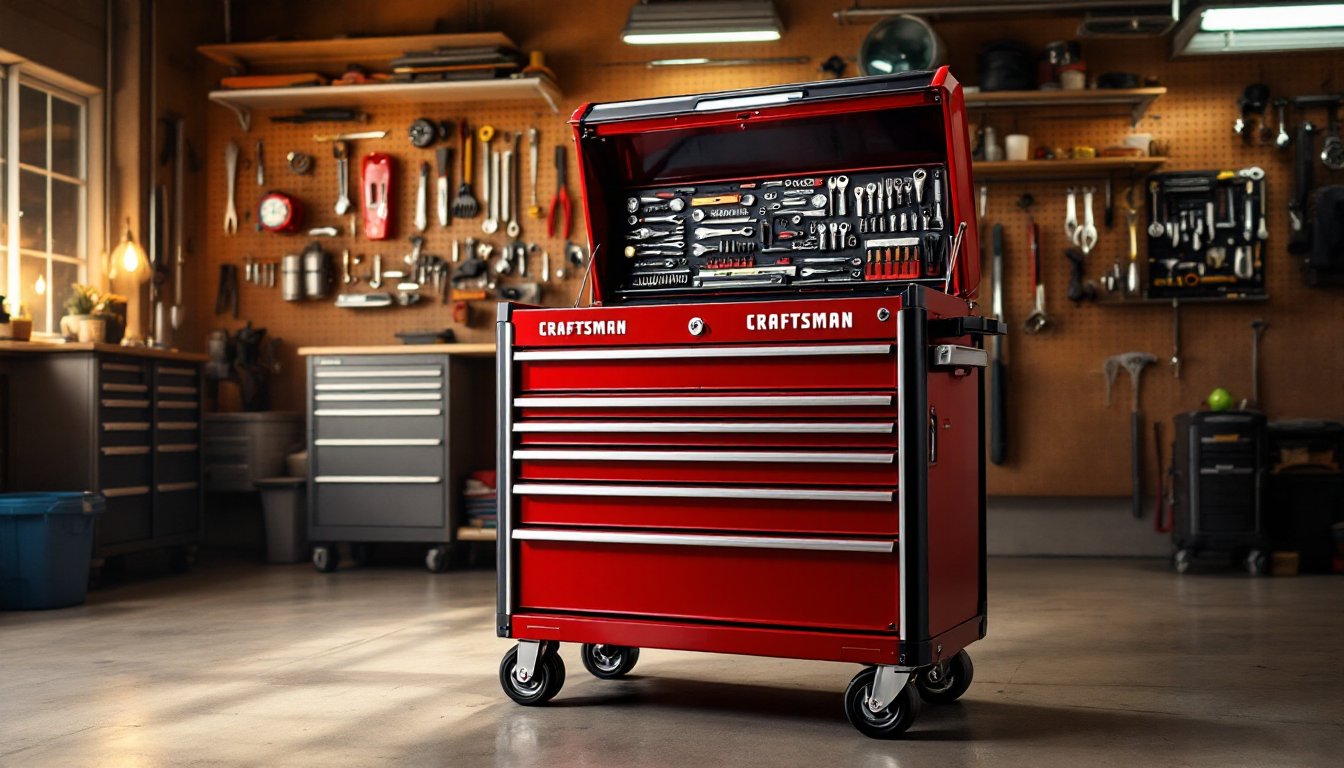
A cluttered garage and a sore back from hauling heavy tools between projects don’t have to be part of the DIY experience. A Craftsman tool box on wheels transforms how homeowners and professionals organize, transport, and access their tools. Whether tackling a weekend deck build or maintaining a full workshop, mobile tool storage keeps everything within arm’s reach while eliminating the frustration of lost screwdrivers and buried wrenches. This guide walks through what separates a truly useful rolling tool box from a cheap knockoff, which features actually matter, and how to pick the right size without overspending or undershooting.
Table of Contents
ToggleKey Takeaways
- A quality Craftsman tool box on wheels prioritizes structural integrity, heavy-duty ball-bearing wheels, and secure locking mechanisms to ensure durability and reliable long-term performance.
- Choose between polypropylene and welded steel construction based on your use case: lightweight plastic for frequent transport, or heavier steel for better impact resistance in workshop settings.
- Customize your Craftsman tool box storage with adjustable dividers, removable trays, and LED work lights to maximize organization and reduce time spent hunting for tools.
- Size your rolling tool box based on your actual tool collection and workflow: casual DIYers need 3–5 drawers, while professionals should plan for 8+ drawers or stackable systems.
- Smooth-rolling ball-bearing wheels rated for 1,000+ pounds and sealed joints that resist rust are worth the investment, as they prevent frustration and extend the tool box’s lifespan by years.
What Makes A Quality Mobile Tool Box Stand Out
A quality mobile tool box isn’t just a plastic cart with drawers bolted on. The difference between a $150 box that falls apart after two seasons and a $400 unit that lasts a decade comes down to three core factors: structural integrity, wheel reliability, and locking mechanism.
Structural integrity starts with the box frame. Look for welded steel or heavy-duty polypropylene construction that resists warping under load. When you load 200+ pounds of tools, the last thing you need is a frame that flexes and pops drawers open mid-transport. Craftsman’s better models use reinforced seams and corner bracing specifically designed to handle repeated opening, closing, and movement.
The wheels make or break the experience. Cheap plastic wheels bind up, flat-spot from sitting loaded in a garage, and eventually split. Heavy-duty ball-bearing wheels rated for at least 1,000-pound loads across four wheels mean smooth rolling and years of reliable movement. Swivel casters on the front and fixed wheels on the back give better control, you’re not fighting a cart that wants to tip sideways. Some boxes add a locking foot brake: that’s worth the money if you’re working on slopes or concrete.
Locking mechanisms matter too. A tool box sitting open in a job site is an invitation for theft. Spring-loaded latches and a solid keyed lock on each drawer prevent both accidental spills during transport and opportunistic grabbing. Premium units add a master lock that secures all drawers at once.
Key Features To Look For In A Craftsman Tool Box On Wheels
Storage Capacity And Organization Options
Drawer count and layout drive how efficiently you’ll work. A five-drawer box holds roughly 60–90 items depending on drawer depth: a seven or eight-drawer unit can hold 120+ tools. But more drawers don’t always mean better organization, shallow drawers force long wrenches and pry bars to stick out, while too-deep drawers bury smaller items.
Look for adjustable dividers and removable trays inside drawers. This flexibility lets you customize compartments for your actual toolkit rather than forcing oddly-shaped tools into fixed slots. Pegboard backing on the sides of the box adds vertical storage for frequently-used items without taking up drawer space. Some Craftsman units include a top-mounted compartment or tray, perfect for keeping paint cans, drill bits, or fasteners accessible without opening multiple drawers.
LED work lights built into the lid are practical, not luxury. You’re often working in shade, under a car, or in a corner of the garage. A rechargeable light that runs off the same battery platform as your cordless tools saves headaches.
Durability And Material Construction
High-impact polypropylene or welded steel bodies define the best options. Polypropylene is lighter (easier to move when full) and won’t rust: steel is heavier but takes a beating better and resists denting. Neither is objectively superior, it’s about your use case. Someone moving the box in and out of a truck bed daily might prefer the lighter plastic: a garage-based workshop tolerates steel’s extra weight.
Drawer slides matter more than most people realize. Ball-bearing slides glide smoothly under load and rarely bind. Slide capacity ratings (often labeled 50–100 lbs. per drawer) tell you whether a drawer will sag when fully loaded. Cheap boxes use friction slides that stick and wear faster. Check reviews or handle the unit yourself before buying, if drawers feel sticky or uneven opening, they’ll frustrate you within months.
Lock washers, reinforced corner brackets, and sealed joints keep moisture and dust out. Rust creeping in from poorly sealed seams defeats the purpose of storing tools long-term. Craftsman’s mid-range and premium units generally seal better than budget competitors.
How To Choose The Right Size For Your Needs
Size selection hinges on three questions: What tools do you actually own? Where will you store it? How often do you move it?
Count your tools honestly. Walk through your garage and gather every wrench, socket, driver, and specialty item you use monthly. A 20-piece socket set, 10 screwdrivers, 8 adjustable wrenches, plus pliers, levels, and drill bits add up fast. A casual DIYer tackling decks and drywall repair might comfortably fit tools into a 3-drawer box (roughly 35–50 lbs. when full). A homeowner maintaining plumbing, electrical, general carpentry, and vehicle maintenance often needs 5–7 drawers (80–150 lbs.). A professional handyman or serious hobbyist with multiple specialties should plan for 8+ drawers or consider a multi-piece system with a rolling base and stackable chests.
Weigh and measure before buying. A fully loaded 7-drawer Craftsman box on wheels typically measures 26 inches wide, 20 inches deep, and 32 inches tall, weighing 250+ pounds when fully stocked. If you’re maneuvering it through doorways, around tight corners, or lifting it in and out of a truck, that size might be impractical. Conversely, undersizing means tools stacked three-deep in drawers, items buried at the back, and frustration every time you need something.
Storage location dictates construction choice. A box living in a climate-controlled garage can use plastic: one parked outside half the year demands steel or corrosion-resistant materials. Humidity and temperature swings cause plastic to become brittle or warp over time.
Transport frequency matters. If the box moves weekly to different job sites, prioritize smooth-rolling wheels, a comfortable push handle, and lighter overall weight. If it stays mostly in the garage but occasionally travels, a heavier but more durable box makes sense.
Conclusion
Investing in a quality Craftsman tool box on wheels pays dividends every time you reach for a tool. The right size keeps you organized without wasting space or cash on a giant cart you’ll barely use. Solid construction, reliable wheels, and smart organization mean fewer lost hours hunting for tools and more time actually building. Don’t cheap out on the box itself, a mid-range unit earning solid reviews typically outlasts and outperforms budget options by years. Choose based on your actual tool collection and workflow, not the discount price, and you’ll get a storage partner that works as hard as you do.