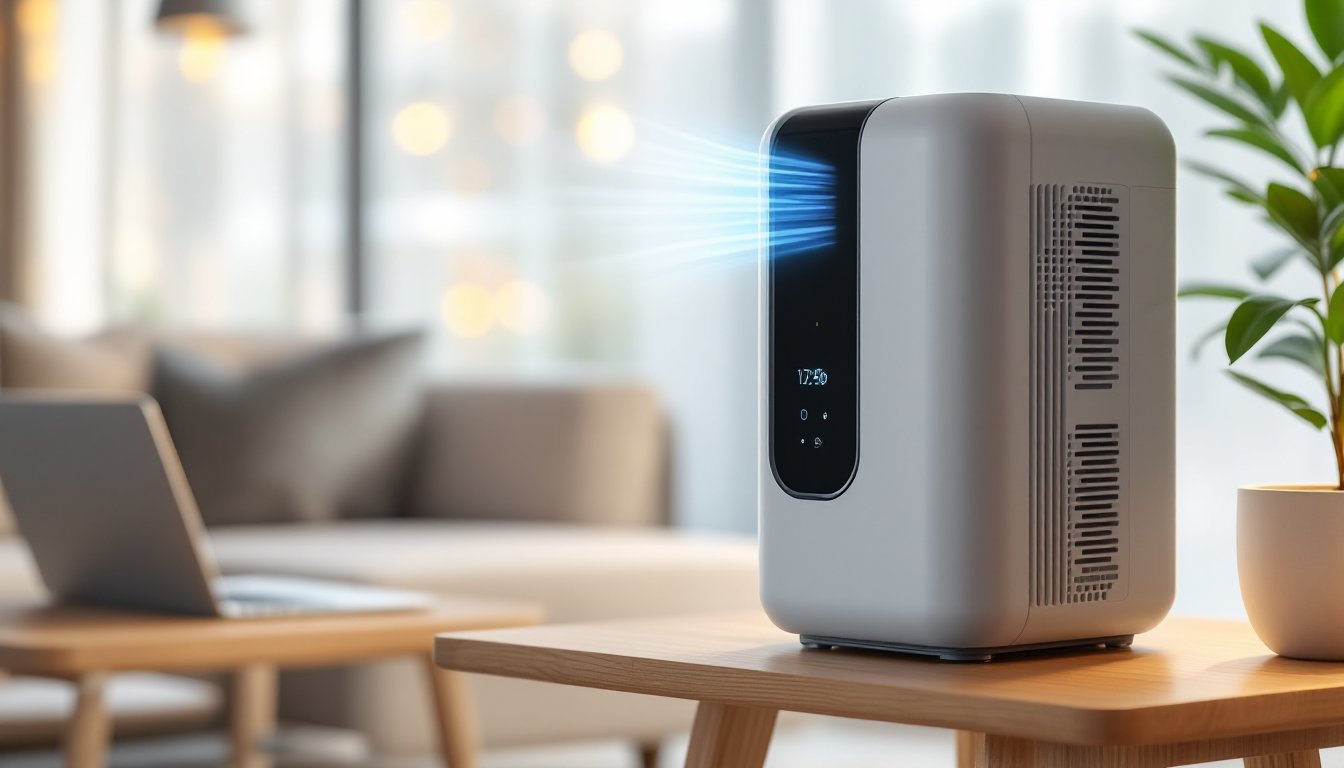
Indoor air quality matters more now than ever. Whether it’s seasonal allergens, pet dander, wildfire smoke, or just the buildup of everyday dust, most homes harbor contaminants you can’t see. The AirDoctor air purifier has become a go-to choice for homeowners serious about breathing cleaner air, but at a premium price point, it deserves careful consideration. This review cuts through the marketing and examines whether AirDoctor delivers the filtration performance and reliability its cost suggests. We’ll walk through how it works, what it actually filters, how loud it runs, and whether it makes financial sense for your space.
Table of Contents
ToggleKey Takeaways
- AirDoctor air purifier uses a three-stage filtration system—pre-filter, UltraHEPA, and activated carbon—to capture particles as small as 0.1 microns and address dust, pollen, pet dander, and odors.
- Operating costs are modest at $7–$15 monthly in electricity, but factor in filter replacements ($200–$400 every 6–12 months) for a realistic five-year ownership cost of $2,000–$3,000.
- The AirDoctor performs best in spaces up to 700 square feet with notably quiet operation (22–24 decibels on low), making it ideal for bedrooms and offices where silent filtration matters.
- Real-world improvement takes hours, not minutes—AirDoctor works gradually by cycling room air repeatedly, and dead zones far from the unit see minimal benefit without proper placement and door sealing.
- Skip AirDoctor if budget is the primary concern or you need coverage for very large spaces; consider it if allergies, seasonal pollution, or quiet operation are priorities.
What Is AirDoctor and How Does It Work?
AirDoctor is a tabletop air purifier designed to remove airborne pollutants from indoor spaces. Unlike portable fans or simple carbon filters, AirDoctor uses a multi-stage filtration system to capture particles as small as 0.1 microns. The core mechanism draws air through a pre-filter first, which traps larger debris like dust and pet hair, reducing strain on downstream stages. Next comes a UltraHEPA filter, a proprietary variation on traditional HEPA technology that claims to capture particles the standard HEPA rating doesn’t require. Finally, air passes through activated carbon, targeting odors and volatile organic compounds (VOCs) from paint, cleaners, and off-gassing materials.
The unit pulls contaminated air in from the sides and top, passes it through the filter stack, and releases cleaned air from the rear. A quiet motor drives an internal fan, and most models include sensors to detect air quality and adjust fan speed automatically. This “smart” approach means the unit works harder when pollution levels spike but runs more quietly during calm periods, which also reduces energy draw.
Key Features and Specifications
AirDoctor’s lineup includes several models, each with slightly different specs. The most common residential option covers spaces up to 700 square feet and boasts a CADR rating (Clean Air Delivery Rate) of around 284 for dust, 285 for pollen, and 218 for smoke. CADR is the gold standard for measuring how fast an air purifier cleans the air, higher numbers mean faster purification cycles.
Most AirDoctor models feature:
- Auto-sensing technology that adjusts fan speed based on real-time air quality data
- Whisper-Quiet mode for nighttime or low-pollution periods
- Filter replacement indicators to notify you when cartridges need changing
- Layered filtration: pre-filter, UltraHEPA, and activated carbon stages
- Multiple fan speeds for manual control when needed
- Stackable design for compact storage and portability
Filter replacements typically run $200–$400 per set (all stages combined) and last 6–12 months depending on local air quality and usage. Actual filter lifespan varies significantly: homes near highways, with pets, or in dusty climates will need more frequent changes.
Performance: Filtration Capabilities and Air Quality Results
On paper, AirDoctor’s UltraHEPA filtration sounds impressive, and real-world testing confirms it handles the basics well. It captures pollen, dust, mold spores, and pet dander efficiently. HEPA filtration inherently stops particles down to 0.3 microns with 99.97% efficiency: AirDoctor’s claim of 0.1-micron capture exceeds standard ratings but hasn’t been independently verified by AHAM (Association of Home Appliance Manufacturers).
For wildfire smoke and fine particulate matter (PM2.5), AirDoctor performs reasonably well, though no air purifier is a complete solution in heavy smoke events, outdoor air sealing and ventilation strategy matter just as much. The activated carbon stage does address odors from cooking, pets, and off-gassing, though carbon filters saturate over time and can’t be recharged.
One honest note: air purifiers don’t improve air quality instantly. They work gradually by cycling room air through the filter repeatedly. In a 700-square-foot space with moderate pollution, expect noticeable improvement within a few hours, not minutes. Performance also depends on door/window sealing and air circulation patterns, dead zones away from the unit won’t benefit as much.
Noise Level, Energy Efficiency, and Operating Costs
Noise is where AirDoctor earns points. On its lowest setting, it produces roughly 22–24 decibels, similar to a whisper and barely audible in a bedroom. Even on medium speed, most users report 40–50 decibels, comparable to a quiet office. High speed does ramp up to around 65–70 decibels, which some find noticeable during evening use, but the auto-sensing feature keeps it at lower speeds most of the time if pollution is moderate.
Energy consumption sits around 80–150 watts depending on the model and fan speed, less than most window AC units. Running 24/7, expect roughly $7–$15 per month in electricity costs (assuming $0.12 per kilowatt-hour: rates vary by region). Over a year, that’s $84–$180, making operational cost low relative to purchase price.
Total cost of ownership matters: the unit itself ($400–$700 depending on model), plus filters every 6–12 months ($200–$400), plus electricity. Amortized over five years, a typical household might spend $2,000–$3,000 total. That’s meaningful money, so the question isn’t just “does it work” but “is this the right solution for your needs.”
Design, Size, and Room Coverage
AirDoctor’s form factor is compact and stackable, roughly 13 x 13 x 20 inches (depending on model), making it less obtrusive than some bulkier competitors. The cylindrical design fits in corners, bedroom nightstands, or living room shelves without dominating the space. Styling is neutral and modern: it won’t clash with most decor.
Room coverage is the critical sizing metric. AirDoctor’s popular 700-square-foot model works best in that footprint or smaller. If your bedroom is 200 square feet, it’ll refresh the air relatively quickly. If you’re trying to cover a 1,500-square-foot open-plan home with a single unit, results will be slower and spotty, dead zones far from the intake will see minimal benefit. Many homeowners in larger spaces use multiple units or accept that coverage is partial.
Portability is reasonable: the unit weighs around 25–30 pounds, so moving it between rooms is feasible but not effortless. Filter changes require removing the outer shell and swapping cartridges, a 5-minute job if you’ve done it once, though replacement filters aren’t cheaper than the unit’s initial cost.
Is AirDoctor Worth the Investment?
The honest answer depends on your situation. AirDoctor is a premium option in a crowded market: competitors like Coway, Blueair, and IQAir offer strong filtration at lower price points. If you’re buying purely on features and CADR ratings, you might find better value elsewhere.
But, AirDoctor earns consideration if:
- You prioritize quiet operation during sleep or work
- You have multiple allergies or asthma and need solid HEPA performance
- You live in an area with seasonal pollution (wildfire smoke, high pollen counts) and want reliable background filtration
- You value simplicity and prefer avoiding app-heavy smart features
- You can accept the recurring filter cost without sticker shock
Skip AirDoctor if you’re looking for the cheapest air purifier or need to cover a very large space. For a 200–400-square-foot bedroom or office, the investment makes more sense than for a sprawling home where you’d need multiple units.
Critically, no air purifier replaces good air management: opening windows when pollution is low, using exhaust fans in bathrooms and kitchens, and addressing moisture or mold issues head-on. AirDoctor is a helpful tool, not a cure-all.
Conclusion
AirDoctor delivers solid filtration, quiet operation, and reasonable efficiency at a premium price. It’s a capable air purifier for focused spaces, but it’s not the only choice and won’t dramatically transform air quality without supporting ventilation and surface maintenance. Before purchasing, measure your room, check your local air quality patterns, and compare specs side-by-side with mid-range alternatives. If allergies or air quality concerns are serious, it’s worth the investment: if you’re testing whether air purification helps, consider renting or buying a more affordable model first.