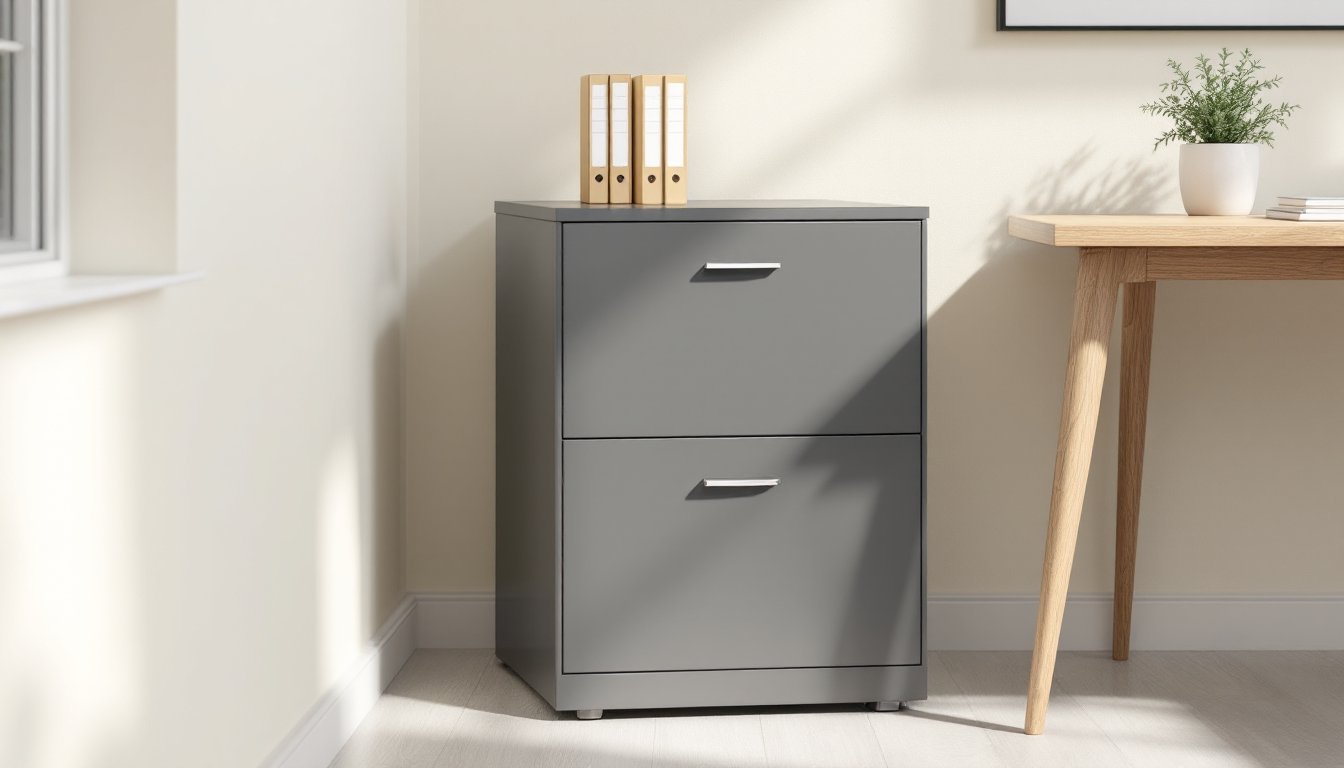
A 2 drawer filing cabinet is an ideal storage solution for home offices, small workspaces, and anyone who needs to keep documents organized without dominating the room. Unlike larger filing systems, a 2 drawer model strikes a balance between capacity and footprint, it holds enough paperwork to stay functional while fitting neatly beside a desk or in a corner. Whether managing household records, business documents, or creative projects, this compact filing cabinet delivers practical storage when space matters. The right choice depends on understanding what features serve the job best and how to match the cabinet to actual needs rather than aspirational organization schemes.
Table of Contents
ToggleKey Takeaways
- A 2 drawer filing cabinet holds 1,000 to 2,000 sheets and fits compactly in small spaces without consuming valuable floor real estate in home offices or apartments.
- Steel lateral filing cabinets with smooth drawer slides and quality locks offer superior durability and security for sensitive documents compared to wood alternatives.
- Proper organization discipline—including consistent labeling, active file auditing, and separation of archival materials—determines the long-term effectiveness of your filing cabinet.
- Drawer depth of 20 inches or more and locking mechanisms are critical features to evaluate when selecting a 2 drawer filing cabinet for security and ergonomic access.
- A 2 drawer filing cabinet works best for active, frequently referenced files rather than long-term archival storage, complemented by a hybrid approach using shelving or open storage nearby.
Why a 2 Drawer Filing Cabinet Works for Small Spaces
A 2 drawer filing cabinet solves a real problem for people managing documents in tight quarters. Most home offices and small work areas don’t have room for a full four or five-drawer unit, and honestly, they don’t need one. Two drawers typically hold 1,000 to 2,000 sheets of standard 8.5″ × 11″ paper, depending on the cabinet depth (usually 18″ to 20″), which covers most household and small business filing needs.
The footprint advantage is significant. A standard 2 drawer filing cabinet measures roughly 28 to 30 inches wide, 18 to 20 inches deep, and 28 to 32 inches tall, meaning it fits against a wall next to a desk without blocking natural traffic flow or dominating a small room. This makes it ideal for home offices, apartment dwellers, or professionals with limited workspace.
Beyond dimensions, a 2 drawer filing cabinet is psychologically manageable. Smaller systems discourage hoarding and force a conversation about what actually needs keeping. That discipline prevents the common problem of filing cabinets becoming black holes where documents go in but useful retrieval becomes impossible. With limited space, people stay more intentional about what gets filed and what gets tossed.
They’re also more affordable than larger units while delivering the same core function: secure, organized document storage. For a home office or startup environment, investing in a solid 2 drawer cabinet makes more financial sense than overbuying capacity that sits idle.
Key Features to Look For When Buying
Material and Durability
The material determines how long a 2 drawer filing cabinet will actually last and how much punishment it can take. Steel cabinets are the workhorse choice, durable, fire-resistant (many models include fire-rated construction), and able to handle heavy files without sagging. A solid steel unit will cost more upfront but resists dents, corrosion, and drawer failure after years of daily use. Look for baked enamel or powder coat finishes, which are tougher than simple paint and resist scratches better.
Lateral filing cabinets (drawers open side-to-side) are becoming more common than vertical models and offer better access when space is tight. They typically use full-width drawers that pull completely open, making file retrieval easier than vertical cabinets where you have to reach deep into a narrow opening.
Wood filing cabinets look better in traditional offices or executive spaces but are heavier, more expensive, and require more maintenance. They’re also less fire-resistant unless specifically constructed for that purpose. If aesthetics matter in a visible work area, wood is worth considering: if durability and function are paramount, steel wins.
Check drawer depth carefully. 18-inch deep drawers are common but shallow, they work for letter-size files but feel cramped. 20-inch or deeper drawers give breathing room and accommodate legal-size files more comfortably. Confirm weight capacity: decent quality cabinets hold 50 to 75 pounds per drawer, which translates to roughly 250 to 350 sheets of paper per drawer (accounting for files and folders).
Locking Mechanisms and Security
Security features matter when files contain sensitive information, financial records, or confidential documents. A basic key lock engages one lock that secures both drawers when you turn the key, simple, effective, and standard on most mid-range models. A dual-lock system allows each drawer to lock independently, which is useful if you’re sharing the cabinet or want to restrict access to specific drawers.
The lock quality varies widely. A cheap pot-metal lock feels loose and may stick or jam. Higher-quality locks (usually found on lateral filing cabinets and steel models) operate smoothly and resist picking. If security is critical, say, for client files or HR records, spend a bit more on a cabinet with a certified quality lock or consider a lateral steel cabinet with reinforced locking.
Some modern filing cabinets include electronic locks controlled by keypad or RFID card, which tracks access and provides audit trails. These cost significantly more but are essential for regulated industries handling protected information.
Damage prevention is another angle: anti-tip features (leveling feet, back braces) keep the cabinet from toppling if someone tries to yank a drawer open too hard or loads one drawer unevenly. This is especially important in homes with kids or pets, or in offices where the cabinet might see rough handling.
Best Uses and Organization Tips
A 2 drawer filing cabinet shines when used for active, regularly accessed files rather than long-term storage. Household bills, tax returns from the last three years, insurance documents, and medical records are perfect candidates. Businesses with fewer than a dozen employees often start with one or two 2 drawer cabinets before expanding to a larger system.
Organization matters more than the cabinet itself. Before buying, audit what you actually keep. Count the number of active files you reference monthly, then the ones you touch quarterly, and finally archival materials going into long-term storage. A 2 drawer filing cabinet should hold only active and recent files: archival boxes go elsewhere (a closet shelf, under-bed storage, or off-site archive service).
Use a consistent labeling system: hanging folder tabs, file folders inside those hangers, and a simple alphabetical or categorical structure. A basic system, one folder per topic, clearly labeled, beats elaborate color-coding that requires constant mental translation. Test the drawer slides before committing to a filing system: smooth, full-extension drawer slides make retrieval vastly easier than partial-extension mechanisms that require reaching to the back.
Consider pairing a 2 drawer filing cabinet with a small shelving unit or open storage for active reference materials you access daily. This hybrid approach keeps the filing cabinet focused on true filing while reducing clutter on and around the cabinet itself.
Place the cabinet somewhere accessible but not in the primary walkway. A corner placement or against a wall adjacent to the desk minimizes visual clutter and prevents the cabinet from becoming a traffic hazard. Ensure adequate clearers room for the drawers to open fully without hitting other furniture or doors.
Conclusion
Selecting the right 2 drawer filing cabinet comes down to matching actual needs, space, security level, and file volume, to the features available. Steel lateral models with smooth drawer slides and quality locks deliver the best real-world performance, while wood options suit aesthetically driven spaces. The real payoff comes after purchase: discipline about what gets filed, consistent labeling, and a filing system you’ll actually use. A modest, well-chosen cabinet beats an oversized system that gets abandoned after three months.