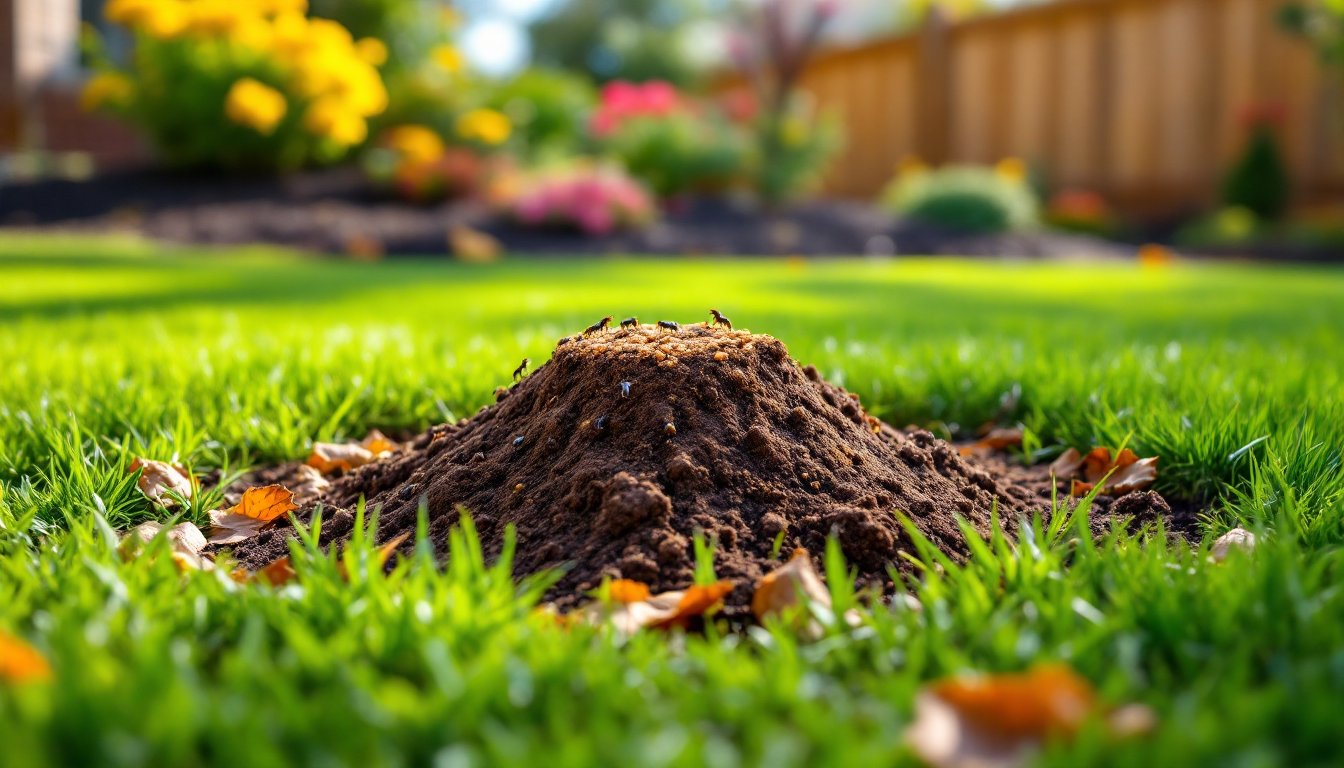
Ant hills dotting a lawn or garden bed aren’t just an eyesore, they’re a sign of an active colony that’ll keep expanding if left alone. Whether someone’s dealing with fire ants, carpenter ants, or common yard ants, the problem demands a practical approach: identify what’s happening, choose the right treatment, and follow through consistently. This guide walks through proven methods to eliminate ant hills, from chemical treatments to natural solutions, plus strategies to keep them from coming back. The goal isn’t just a one-time kill, it’s lasting control.
Table of Contents
ToggleKey Takeaways
- Identify the ant species first—fire ants, carpenter ants, and pavement ants each require different treatment approaches, with fire ants being the most dangerous.
- Effective ant hill killer products use delayed-action mechanisms like granular baits to ensure worker ants carry poison back to the queen, which is the only way to eliminate the entire colony.
- Apply chemical or natural treatments in late spring through early fall when ant colonies are most active, as cool weather significantly reduces treatment effectiveness.
- Combine immediate relief with long-term solutions using a two-step approach: use fast-acting surface sprays paired with slow-acting baits to prevent recolonization.
- Prevention is critical—eliminate moisture, food sources, and shelter by fixing outdoor faucets, managing mulch, and maintaining healthy lawns to stop new ant hills from forming.
- Consistency beats one-time treatments; monitor and reapply every 7–14 days for 4–6 weeks, and call a professional pest control operator if infestations persist after three weeks or involve carpenter ants near structures.
Understanding Your Ant Problem
Before reaching for any ant hill killer, it’s critical to identify what kind of ants are present. Fire ants, for example, are aggressive, leave painful stings, and require prompt removal: common pavement ants are mostly a nuisance: carpenter ants are a structural concern because they tunnel through wood rather than just mounding soil.
Spot the signs: if the ant hills are located near the foundation, in garden beds, or under patio edges, the colony is likely established and active. Each mound may represent thousands of ants, and the queen, usually underground deeper than visible, is what keeps the colony thriving. Without eliminating the queen, worker ants will rebuild the mound within days.
Timing matters too. Late spring through early fall is when colonies are most active and treatments work best. Cool weather slows ant activity, making chemical treatments less effective. Also check local regulations: some states or municipalities restrict certain ant control products, especially in agricultural zones or near waterways.
Chemical Treatment Methods
Chemical treatments are the most reliable way to eliminate an entire ant colony, provided the right product is chosen and applied correctly.
Granular Baits and Powders
Granular bait products like spinosad-based or indoxacarb formulations work by luring worker ants to carry poison back to the nest. The ants ingest the active ingredient, then spread it throughout the colony before dying, eventually killing the queen. This delayed-action mechanism is key: if the workers die instantly at the surface, they never reach the queen.
Application is straightforward. Broadcast the granules directly over the ant hill mound and about 12 inches around its perimeter, then water lightly so the granules settle into the soil and activate. Do this in early morning or late evening when ants are most active. Most products require reapplication after 7–14 days if the mound is still visible.
Safety first: Wear gloves and avoid breathing dust when applying powders. Keep pets and children away from treated areas for the time specified on the product label, typically 12–48 hours. If the yard has an irrigation system, avoid spraying treated areas until the product has set.
Liquid drenches, another chemical option, are poured directly into the mound. These work faster than granular baits but can be less effective if the queen is deep in the nest. A typical application uses 1–2 gallons of diluted solution per mound, poured slowly so it soaks down. Always follow label dilution rates: overapplication wastes product and risks runoff into soil or water.
For imported fire ants specifically, two-step approaches combining a slow-acting bait with a fast-acting surface spray give better results. The bait targets the colony over time: the spray provides immediate relief from surface foragers. This combo prevents survivors from immediately recolonizing.
Natural and Non-Toxic Solutions
Not everyone wants chemicals on their property, especially in vegetable gardens or where pets dig. Natural options exist, though they typically require more persistence.
Diatomaceous earth (DE) is a fine powder made from fossilized diatoms. When ants walk through it, the powder damages their exoskeletons, causing dehydration. Spread food-grade DE (never pool-grade) in a 2–3 inch band around and over the mound. Reapply after rain or watering, as moisture reduces effectiveness. Results take 1–2 weeks, and multiple applications are usually necessary.
Cinnamon and coffee grounds are anecdotal remedies with limited scientific backing. Ants dislike their smell, but these substances won’t kill a colony, they may only deter foragers. If someone uses them, layer them thickly (3+ inches) directly on the mound and let sit for several days, then repeat.
Boiling water is free and immediate but only kills ants on contact and near the surface. Pour 2–3 gallons of rapidly boiling water directly onto the mound. This destroys the visible nest structure and surface workers but rarely reaches the queen deep underground. Use this as a temporary solution if chemical or natural baits aren’t available: expect the mound to return.
Essential oils like peppermint or tea tree are sometimes recommended, but they don’t eliminate colonies. Mix a few drops with water and spray the mound daily for a week or more. This repels ants temporarily but doesn’t prevent recolonization.
The most effective natural approach combines persistence: use DE weekly for 3–4 weeks, or apply granular baits labeled as “organic” (spinosad-based products are OMRI-certified for organic gardening). Results are slower than synthetic chemicals, but they work if applied consistently.
Prevention and Long-Term Management
Killing one ant hill is a start, but preventing new colonies from establishing is where real control happens.
Eliminate attraction factors. Ants seek moisture, shelter, and food. Fix leaky outdoor faucets, redirect downspouts away from garden beds, and keep mulch 6 inches away from the house foundation. Remove fallen fruit, pet food left outside, and decaying plant matter, all draw ants in.
Maintain lawn and garden health. Well-watered, healthy grass and dense plant cover make it harder for ants to establish mounds. Thin, stressed lawns are easier targets. Aerate compacted soil and overseed bare patches.
Create barriers. Ant baiting stations placed strategically around the property can intercept foragers before they establish new colonies. Use a product like Amdro or spinosad baits and refresh them monthly during warm seasons. Position stations away from children and pets, in shaded areas.
Monitor the treated area. After treating, inspect the mound daily for the first two weeks. If foragers are still active or the mound rebuilds, reapply the treatment. Some colonies require two or three applications before the queen is eliminated.
Know when to call a pro. If the yard has multiple large infestations, if fire ants are confirmed, or if homeowner-applied treatments aren’t working after three weeks, a licensed pest control operator has stronger products and expertise. This is especially true for carpenter ants near a structure, they can cause damage if left unchecked.
Consistency beats panic. One-off treatments often fail because ants recolonize within weeks. Build a routine: bait in spring, monitor through summer, refresh baits in fall. Most yards see near-complete control within 4–6 weeks with this rhythm.
Conclusion
Killing ant hills requires matching the right tool to the problem: chemical baits for speed and effectiveness, natural options for gardens where chemicals aren’t suitable, and prevention to stop new colonies from taking root. The key is patience and follow-through, ants don’t die overnight, but a consistent approach eliminates them for good. Start treatment in spring or early summer, reapply as needed, and address the conditions that attracted them in the first place. That’s how homeowners win the long game against yard ants.