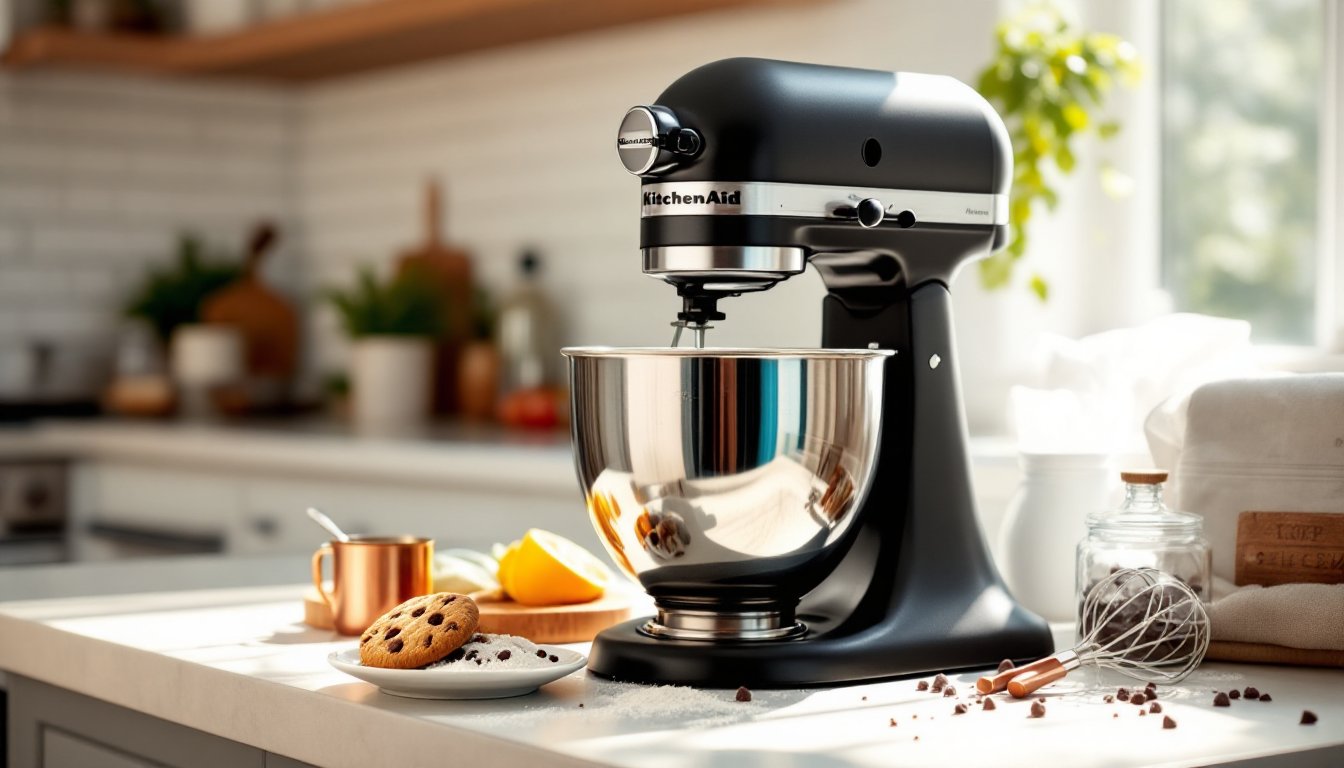
A stand mixer sits on the counter like potential waiting to happen. Whether someone just unboxed a new KitchenAid stand mixer or inherited one from a relative, the real magic happens when that machine finally gets used for more than occasional cake batter. This guide covers practical KitchenAid mixer recipes for beginners and explains how to unlock the full potential of this workhorse kitchen tool. From soft doughs to stiff batters, a stand mixer handles tasks that would otherwise require a second pair of hands, or serious forearm endurance. The key is understanding which attachments do what, then diving into recipes that actually showcase why this machine earns its countertop real estate.
Table of Contents
ToggleKey Takeaways
- A KitchenAid stand mixer saves time and improves baking consistency by automating repetitive tasks like creaming butter and kneading dough, freeing your hands for other kitchen work.
- The three essential attachments—flat mixing paddle, dough hook, and wire whip—each serve distinct purposes: cookies and batters, bread doughs, and whipped items respectively.
- KitchenAid mixer recipes for beginners like chocolate chip cookies can be perfected in 90 seconds of creaming compared to 2–3 minutes by hand, while pizza dough develops proper gluten structure in 8 minutes instead of 15–20.
- The dough hook eliminates uneven mixing and weak gluten strands that occur with hand-mixing, delivering consistent results for yeast breads like focaccia and pizza dough every single batch.
- Starting with simple recipes like cookies, pizza dough, and focaccia builds confidence and technique, preparing you to tackle more advanced KitchenAid mixer recipes like croissants and pasta dough.
Why a Stand Mixer Changes Your Baking Game
A KitchenAid stand mixer isn’t just a time-saver, it’s a technique multiplier. When the mixer runs, the user’s hands stay free to prep ingredients, measure the next component, or simply step away without fatigue setting in. Hand-mixing bread dough for 10 minutes builds endurance: using the dough hook for the same task builds structure while the baker does something useful.
The real advantage shows up in consistency. A stand mixer creams butter and sugar at a precise speed for the exact time needed to incorporate air into cookie dough. It kneads yeast doughs evenly without the dead spots and weak gluten strands that can result from uneven hand mixing. For beginners, this means fewer baking disasters and faster skill development. Those new to KitchenAid stand mixer uses quickly discover that once the machine takes over repetitive work, energy gets redirected toward flavor development, adjusting spice levels, perfecting ingredient timing, or testing texture at different stages.
Essential Attachments and Their Best Uses
Every KitchenAid mixer ships with three core attachments, and knowing their purpose prevents confusion and poor results.
The Flat Mixing Paddle handles most general mixing: batters, frosting, mashed potatoes, and chunky mixtures. It scrapes the bowl sides as it turns, ensuring nothing gets left behind. Use this for cookies, brownies, cake batters, and anything that benefits from thorough but gentle incorporation.
The Dough Hook was built for bread. Its spiraling design mimics hand-kneading, developing gluten structure over 8–10 minutes of machine time versus 15–20 minutes by hand. Pizza dough, focaccia, dinner rolls, and sandwich loaves all rely on the dough hook. When using this attachment, start on speed 1 (low) for the first minute to prevent flour clouds from escaping the bowl.
The Wire Whip aerates. Whipped cream, meringue, angel food cake batter, and egg white foams all need vigorous air incorporation, exactly what the whip delivers. Switch to the whip when recipes demand volume and lift: the paddle and hook can’t generate the same effect.
Most KitchenAid mixer recipes for beginners stick to these three. Premium models offer additional options like a food grinder or pasta press, but the standard set covers nearly every home baking task.
Classic Cookie and Dough Recipes
Perfect Chocolate Chip Cookie Dough
Chocolate chip cookies showcase exactly why someone needs a stand mixer. The creaming process, beating softened butter with sugar until pale and fluffy, takes 2–3 minutes by hand or about 90 seconds on speed 4 with the flat mixing paddle. That extra air incorporated during creaming creates tender, cake-like cookies with gentle spread.
Ingredients:
- 2¼ cups all-purpose flour
- 1 teaspoon baking soda
- 1 teaspoon salt
- 1 cup (2 sticks) butter, softened to room temperature
- ¾ cup granulated sugar
- ¾ cup packed brown sugar
- 2 large eggs
- 2 teaspoons vanilla extract
- 2 cups chocolate chips
Steps:
- Preheat oven to 375°F. Fit the mixer with the flat paddle.
- In a small bowl, whisk together flour, baking soda, and salt. Set aside.
- Add softened butter and both sugars to the mixer bowl. Mix on speed 4 for 90 seconds until the mixture turns pale and fluffy.
- Reduce speed to 1. Add eggs one at a time, mixing for 15 seconds after each addition. Add vanilla extract and mix for 10 seconds.
- With the mixer still on speed 1, gradually add the flour mixture over 20–30 seconds until just combined. Don’t overmix: the dough should look slightly shaggy.
- Using a rubber spatula, fold in chocolate chips by hand. The mixer can incorporate them, but hand-folding prevents crushing them.
- Drop rounded tablespoons onto baking sheets, spacing them 2 inches apart. Bake for 9–11 minutes until golden. Cool on the baking sheet for 2 minutes, then transfer to a wire rack.
This dough also freezes well. Scoop and freeze balls on a tray before transferring to a freezer bag: bake frozen dough straight from the freezer, adding 1–2 minutes to the bake time.
Variations work equally well: brown butter (cook butter until foamy, cool before adding), espresso powder whisked into the flour mixture, or sea salt sprinkled on top before baking. The stand mixer adapts to each without complaint.
Bread and Yeast-Based Creations
Homemade Pizza Dough and Focaccia
Yeast doughs are where the dough hook proves its worth. Hand-mixing pizza dough or focaccia leaves shoulders sore and forearms tired, and still might not develop the gluten structure needed for open crumb and good rise.
Basic Pizza and Focaccia Dough:
- 3¼ cups bread flour
- 2 teaspoons instant yeast (or ½ teaspoon active dry yeast per cup of flour for slower fermentation)
- 1¼ teaspoons salt
- 1 tablespoon honey or sugar
- 1 tablespoon olive oil, plus more for finishing
- 1 cup warm water (around 110°F)
Steps:
- Add flour, yeast, and salt to the mixer bowl. Fit the dough hook.
- In a small measuring cup, whisk together warm water, honey, and olive oil.
- With the mixer on speed 1, slowly pour the water mixture into the dry ingredients over about 15 seconds. Mix for another 20 seconds until all flour is moistened and a shaggy mass forms.
- Increase to speed 2 and mix for 6–8 minutes. The dough should pull away from the bowl sides cleanly, form a smooth ball, and feel slightly tacky but not sticky.
- Transfer to a lightly oiled bowl, cover loosely with plastic wrap, and let rise at room temperature for 1–1.5 hours until doubled in volume.
- Turn dough onto a lightly floured surface and divide in half.
For Pizza: Stretch each half into a ¼-inch-thick circle (rough is fine: it’ll relax as it proofs). Top as desired and bake on a preheated 425°F stone or sheet for 12–15 minutes until the crust browns.
For Focaccia: Press each half into a greased 13×9-inch baking pan. Cover with a damp towel and let proof for 30 minutes. Dimple the surface with fingertips, brush generously with olive oil, sprinkle with coarse sea salt and rosemary, and bake at 400°F for 18–22 minutes until golden and hollow-sounding when tapped.
The stand mixer handles this dough in about 8 minutes: hand-mixing takes 15–20 minutes of continuous effort. More importantly, the mixer produces consistent gluten development every batch, which home bakers rarely achieve by hand.
Conclusion
A KitchenAid stand mixer earns its place on the kitchen counter once someone moves past wondering what it does. These recipes, chocolate chip cookies, pizza dough, focaccia, are entry points. Once those succeed, the next batch of KitchenAid mixer recipes for beginners might include croissants, pasta dough, or whipped cream cakes. The attachments don’t change: the confidence does. Start with the flat paddle for cookies, graduate to the dough hook for bread, and discover the wire whip for anything that needs air. From there, the stand mixer becomes less a counter decoration and more a reliable partner in the kitchen.