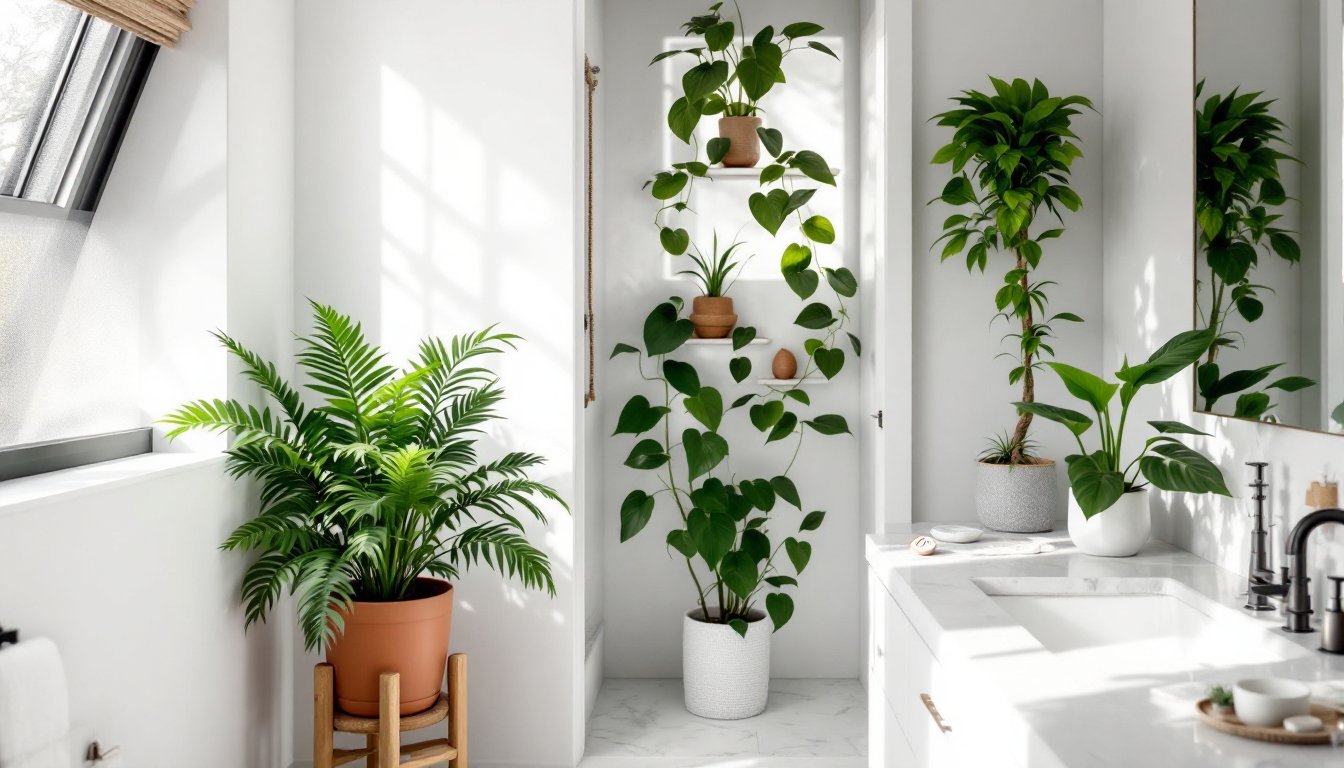
Bathroom moisture is a silent problem most homeowners ignore until mold creeps into corners and paint peels off the walls. Excess humidity shortens the lifespan of fixtures, warps wood trim, and creates a breeding ground for mildew. While exhaust fans help, they’re not always enough, especially in bathrooms without proper ventilation or during long showers. Here’s the practical truth: certain plants absorb moisture directly through their leaves and roots, lowering humidity levels naturally. Adding the right plants to a bathroom isn’t just decorative: it’s a functional, low-maintenance way to protect your space while bringing life into a room that rarely gets attention.
Table of Contents
ToggleKey Takeaways
- Bathroom plants that absorb moisture work through transpiration and by pulling humidity directly from foliage, providing a natural complement to exhaust fans in reducing mold and mildew growth.
- Pothos and Peace Lilies are the best starter plants for high-humidity bathrooms due to their hardiness, low-light tolerance, and minimal maintenance requirements.
- Proper drainage with fast-draining soil and perlite is critical in humid bathrooms, as soil stays wet longer and poor drainage leads to root rot and fungal issues faster than in dry climates.
- Place moisture-absorbing bathroom plants in high-humidity zones near showers and toilets, and match species selection to your bathroom’s actual light conditions to ensure long-term success.
- Monitor humidity levels with an inexpensive meter and establish a grouping strategy with multiple plants in one area to create a microclimate that maximizes moisture absorption.
- Air movement matters in bathrooms—crack the door or use a low-speed fan to prevent stagnant air that promotes mold on leaves and soil.
Why Bathroom Humidity Matters and How Plants Help
Humidity above 60% creates an ideal environment for mold and mildew, which damage drywall, grout, and wood framing. Higher levels also corrode metal fixtures and degrade paint and caulk over time. Standard exhaust fans remove moisture temporarily, but they run for only 20–30 minutes after a shower, leaving residual dampness.
Plants work differently. Through a process called transpiration, they absorb water through their roots and release it as moisture through their leaves, but here’s the key: they also absorb existing humidity directly through their foliage. Species adapted to tropical and subtropical climates evolved to thrive in high-moisture environments, making them naturally suited to bathroom conditions. A well-placed plant reduces ambient humidity while improving air quality, no running costs required.
This doesn’t replace proper ventilation, always run your exhaust fan during and 20–30 minutes after showers, but plants provide a complementary defense against moisture buildup.
Top Moisture-Absorbing Bathroom Plants
Pothos and Philodendrons
Pothos (Epipremnum aureum) and Philodendrons are the go-to first choice for humid bathrooms. Both are nearly impossible to kill, grow quickly, and adapt to low-light conditions common in bathrooms without windows. Pothos thrives on walls, shelves, or hanging from a rod above the sink: Philodendrons grow bushier and work better on counters or plant stands.
Both absorb significant moisture through their broad leaves and prefer consistently damp soil. Water when the top inch feels dry, no special treatment needed. They’ll tolerate neglect far better than fussier plants, making them ideal for busy homeowners.
Boston Ferns and Peace Lilies
Boston Ferns are moisture-absorption powerhouses. Their feathery fronds have a large surface area, meaning more potential for transpiration. They prefer bright, indirect light and soil that stays moist but not waterlogged. The trade-off: they’re more finicky than pothos and will drop fronds if allowed to dry out completely.
Peace Lilies (Spathiphyllum) are the workhorse of humid rooms. They tolerate low light, signal thirst by drooping dramatically (so you know when to water), and produce elegant white spathes. Peace lilies actively remove toxins while absorbing moisture, making them especially valuable in bathrooms where air circulation is limited.
Bamboo Palm and Air Plants
Bamboo Palm (Chamaedorea seifrizii) grows slowly but steadily in bathrooms. Its fronds are narrower than Boston Fern fronds but still contribute meaningfully to moisture absorption. It handles low light and prefers warm, consistently moist conditions, ideal for steamy bathrooms.
Air Plants (Tillandsia species) are unconventional but surprisingly effective. They absorb moisture and nutrients directly from humid air through special scales on their leaves, requiring no soil. Mist them 2–3 times weekly, and mount them on cork or driftwood in well-lit spots. They won’t thrive in windowless bathrooms but work perfectly in rooms with a small window or good artificial light.
How to Care for Bathroom Plants in High-Humidity Conditions
High humidity is a double-edged sword for plants. While transpiration increases in moist air, so does the risk of fungal issues, root rot, and pest problems if drainage isn’t right.
Soil and Drainage: Use a light, fast-draining potting mix, standard houseplant soil works, but adding perlite (roughly 20% by volume) improves aeration. Poor drainage in humid bathrooms leads to soggy roots and fungal growth faster than in dry climates. Pots must have drainage holes: no exceptions. Ensure water drains freely after watering.
Watering Schedule: High humidity means soil stays wetter longer. Water less frequently than you would in a living room, check soil moisture before watering, not on a rigid schedule. Overwatering kills more bathroom plants than underwatering.
Light Conditions: Most moisture-loving plants tolerate low light, but some benefit from brighter spots. If your bathroom has a window, place larger plants like Bamboo Palm nearby. In windowless bathrooms, grow lights designed for plants (LED bulbs rated for plants, 6–12 inches above foliage) support ferns and light-sensitive species like Air Plants.
Air Movement: Stagnant air promotes mold on leaves and soil. Crack the bathroom door slightly or use a small oscillating fan on low speed to gently circulate air. Never aim a fan directly at delicate foliage like ferns.
Humidity Monitoring: If mold appears on soil, reduce watering frequency and improve ventilation. A humidity meter (inexpensive, battery-powered models available at hardware stores) helps track if plants are actually lowering moisture levels.
Setting Up Your Bathroom Plant Space for Success
Plant placement matters as much as species selection. Position plants where they’ll actually absorb moisture and benefit from the bathroom’s conditions.
High-Humidity Zones: Shelves near the shower, corner ledges, or the area above the toilet are peak humidity spots. Placing moisture-absorbing plants here maximizes their impact. Avoid placing plants directly in water spray: wet foliage can develop bacterial spots.
Light Availability: Assess natural light honestly. Full sun through a window is rare in bathrooms: most have low to moderate indirect light. Match plants to actual conditions. Pothos and Peace Lilies tolerate dim corners: ferns prefer brighter spots. Don’t force a plant into a location it can’t thrive in, no matter how perfect the humidity.
Container Choices: Terracotta pots breathe and dry faster, reducing rot risk in humid environments. Ceramic or plastic works too, as long as drainage holes exist. Avoid decorative pots without drainage: water a plant in one, and you’re setting up failure.
Accessibility: Place plants where you can easily reach them to check soil moisture and inspect for pests or fungal issues. A plant wedged behind the toilet is out of sight, out of mind, and out of care. Monthly checks catch problems early.
Grouping Plants: Multiple plants in one area create a microclimate with even higher humidity, boosting moisture absorption. A cluster of Pothos, Ferns, and Peace Lilies on a corner shelf maximizes impact in tight spaces. Spacing them slightly apart maintains airflow and prevents competitive root zones.
Starting small is smart. Choose two hardy species first, Pothos and Peace Lily are an unbeatable combo for beginners, and expand as confidence grows. Success with these two opens the door to fussier species like Boston Ferns or Air Plants.