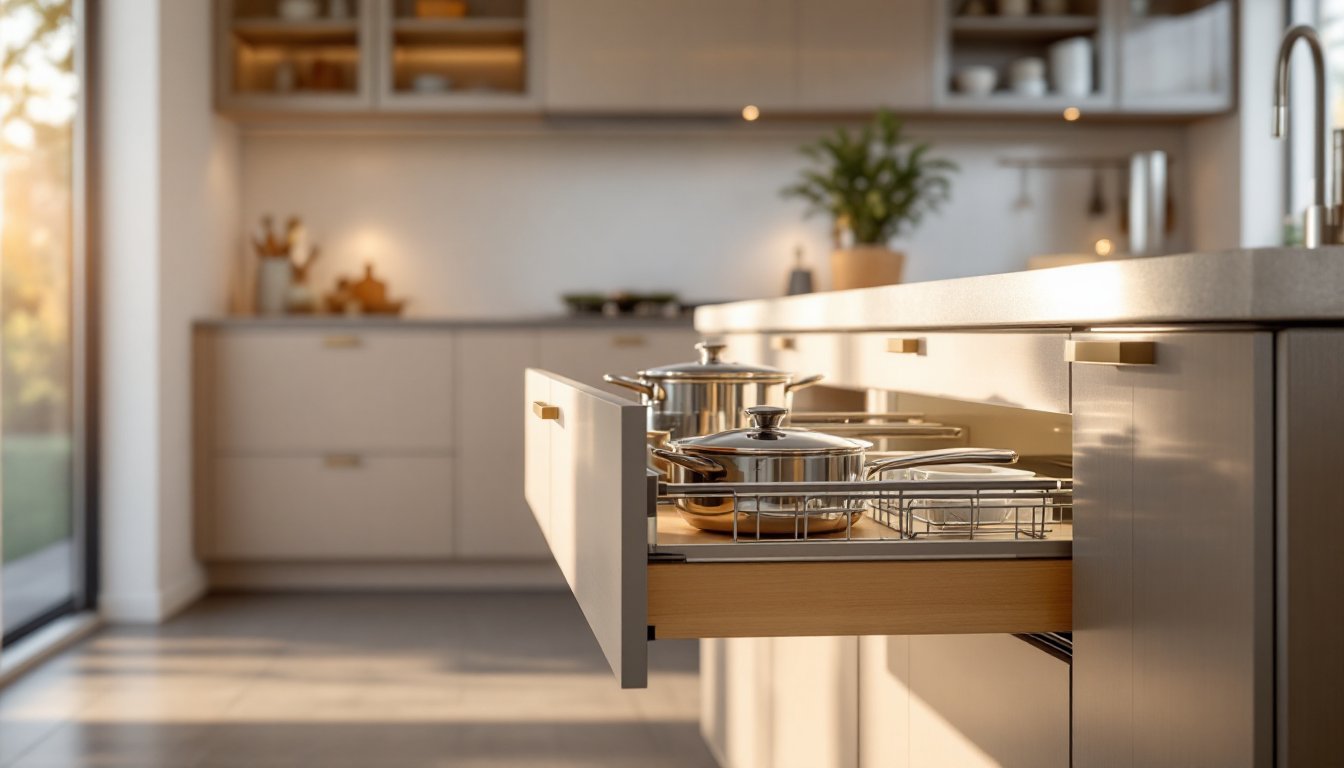
Kitchen cabinets with drawers have become the centerpiece of modern kitchen design, shifting the way homeowners approach storage and functionality. Gone are the days when kitchen cabinetry meant simple shelves behind closed doors, today’s kitchens demand smart, accessible storage solutions that combine practicality with style. Whether renovating an existing kitchen or building from scratch, understanding the ins and outs of cabinet drawers is essential. They’re not just a convenience: they’re a smart investment that can transform how a kitchen works day to day. This guide walks through everything from drawer types and materials to organization strategies and current design trends, giving homeowners the knowledge to make confident choices.
Table of Contents
ToggleKey Takeaways
- Kitchen cabinets with drawers improve accessibility and ergonomics by bringing storage contents to waist height, reducing strain compared to traditional lower cabinets and deep shelves.
- Pull-out drawers with full-extension slides maximize usability in frequently accessed areas, while shallow 4-6 inch drawers suit utensils and deep 18-24 inch drawers work best for baking sheets and large cookware.
- Quality construction matters: choose cabinet drawers with ½-inch plywood, dovetail joinery, and soft-close slides rated for your load capacity to ensure decades of reliable performance.
- Vertical storage and adjustable dividers within drawers maximize space efficiency, especially in open-concept and smaller urban kitchens where every cubic inch counts.
- Handle-less and integrated-handle cabinet designs align with modern minimalist aesthetics, while strategic placement of high-use items at waist height creates intuitive kitchen workflow.
Why Drawers in Kitchen Cabinets Matter More Than Ever
Drawers have fundamentally changed kitchen ergonomics and usability. Unlike traditional cabinet doors that hide everything behind them, drawers bring contents front and center, no more reaching to the back of a deep shelf or getting on hands and knees to find that one pan. This accessibility saves time and reduces kitchen clutter, since items stay organized and visible.
The rise of open-concept kitchens and smaller urban apartments has amplified the need for smarter storage. Every cubic inch matters, and drawers maximize that space without the wasted room that swing-out doors create. Homeowners today expect their kitchens to work harder, and drawers deliver on that expectation.
From an ergonomic standpoint, drawers also promote better posture and reduce strain. Reaching into a waist-high drawer is far more user-friendly than bending to lower cabinets or stretching overhead. This is especially important in aging-in-place kitchen designs, where accessibility isn’t optional, it’s essential. Kitchens with well-designed drawers feel more efficient, more organized, and eventually more valuable when it comes time to sell.
Types of Cabinet Drawers and Storage Solutions
Pull-Out Drawers vs. Standard Drawers
Standard drawers operate on traditional side-mounted slides and open straight out. They’re reliable, relatively affordable, and work well for most kitchen layouts. Standard drawers typically use ball-bearing or roller slides rated for 50 to 100-pound loads, depending on quality. The trade-off: they only open as far as the slide extends, limiting access to the drawer’s full depth.
Pull-out drawers, sometimes called pull-out shelves or cabinet baskets, mount on full-extension slides that let the drawer roll completely out of the cabinet box. This means everything inside becomes visible and reachable without reaching or leaning. Full-extension slides cost more upfront and require better-quality hardware, but they maximize usability and are worth the investment in frequently accessed areas like under the cooktop or near the prep zone.
There’s also a hybrid approach: pull-out cabinets with multiple tiers. These fit into standard cabinet openings and multiply storage by stacking shallow drawers vertically. They’re popular for spice racks, utensils, and small-item organization.
Deep and Shallow Drawer Options
Depth matters. Shallow drawers, typically 4 to 6 inches deep, work perfectly for utensils, gadgets, and cutlery. They keep items organized and prevent the dreaded junk-drawer effect. Standard drawers run 12 to 15 inches deep and handle pots, pans, and mixing bowls.
Deep drawers, sometimes 18 to 24 inches deep, are ideal for baking sheets, cutting boards, and large cookware. The key is matching drawer depth to intended contents. Oversizing everything means items shift around and get lost: undersizing defeats the purpose of having storage in the first place.
Many modern kitchens use a tiered approach: shallow drawers near the prep area, standard depth in the main cabinetry, and deep drawers near baking or cooking zones. This intentional layering keeps the workflow smooth and reduces time hunting for tools.
Materials and Finishes for Durable Kitchen Drawers
The structural integrity of kitchen cabinet drawers depends heavily on material selection. Solid wood, oak, maple, cherry, offers longevity and can be refinished if needed, but costs more and requires maintenance. Plywood is the workhorse of cabinet construction: it’s stable, resists warping, and offers excellent strength-to-weight ratio. A quality cabinet uses ½-inch plywood for drawer bottoms and sides, not thin particle board, which sags under load.
Drawer box construction matters as much as material. Look for dovetail or mortise-and-tenon joinery at corners: these joints lock together and stay solid for decades. Budget alternatives use pocket holes or staples, which are adequate for lighter use but won’t withstand the constant opening and closing a kitchen sees.
On the finish front, thermofoil (a vinyl wrapped over MDF) resists moisture and requires minimal maintenance, a real plus in humid kitchens. Stained or painted wood looks warmer but demands regular sealing, especially around the sink. Lacquer finishes are durable and give a factory-quality appearance, though they’re less forgiving of scratches.
Don’t overlook drawer slides and hardware. European-style soft-close slides (like Blum or Hettich) prevent slamming and add years to drawer life by absorbing impact. They cost 15 to 30 dollars per pair more than standard slides but prevent the wear that hard-closing drawers inflict. In a kitchen that sees daily use, soft-close is a smart investment, not a luxury.
Galvanized or stainless steel hardware resists rust better than plated finishes, especially if the kitchen gets exposed to humidity or splashes. Buy cabinet hardware that matches the finish you’ve chosen and always check weight ratings, a drawer loaded with cast iron needs beefier slides than one holding utensils.
Organizing and Maximizing Drawer Space
Smart organization keeps a kitchen functional and stress-free. Start by assessing what actually goes in each drawer, then size the drawer and its dividers accordingly. A utensil drawer needs thin separators: a pots-and-pans drawer needs deeper sections.
Drawer dividers come in fixed or adjustable varieties. Fixed dividers are built in during cabinet construction and are more durable but less flexible if your storage needs change. Adjustable inserts, modular systems that slide into grooves, let homeowners reconfigure as their kitchen life evolves. Brands like IKEA, Rev-A-Shelf, and Hafele offer modular systems that fit standard drawers.
Vertical storage within drawers maximizes capacity. Baking sheets, cutting boards, and large flat items should stand upright rather than stack, which wastes space and makes lower items inaccessible. For pots and pans, tiered or stepped inserts prevent them from sliding and crashing when the drawer opens.
Use the space above drawers wisely too. Shallow pull-out shelves mounted to the inside of cabinet doors add storage without deep shelving. Spice racks and small-item organizers fit between the drawer and door, doubling functionality in tight kitchens.
A practical tip: label dividers or use clear organizers so every family member knows where things go. This prevents the kitchen from devolving into chaos and keeps drawers from becoming dumping grounds. Spend 10 minutes every month tidying up, it’s far easier than a full reorganization later.
Design Trends and Style Considerations
Modern kitchen design favors minimal, clean aesthetics, and drawers fit perfectly into that vision. Handle-less cabinetry, where drawers open via a subtle grip or touch mechanism, creates seamless lines and an uncluttered appearance. Integrated handles that match cabinet fronts are another trending approach, keeping the visual quiet.
Material trends lean toward sustainable options: reclaimed wood, FSC-certified plywood, and low-VOC finishes. Kitchen cabinets with drawers now often incorporate mixed materials, perhaps natural wood fronts paired with soft-close metal slides and glass-front upper drawers for open shelving.
Color-wise, soft neutrals (greiges, warm whites, soft blacks) dominate 2026 kitchen design, though darker jewel tones and blues are gaining ground for accent cabinetry. Drawers painted in contrasting colors to the rest of the cabinet box add visual interest without overwhelming the space.
Functionality and aesthetics must align. A beautiful drawer that doesn’t close smoothly or organization system that doesn’t fit your cooking style defeats the purpose. Test how drawers feel in showrooms: listen for soft-close action, check the slides for smooth operation, and visualize how your actual pots, pans, and utensils will fit inside.
Consider traffic flow too. High-use items should live in drawers at waist height and within arm’s reach of the prep area. Less-frequent items, fancy serving dishes, specialty baking tools, can go higher or lower. Smart placement saves steps and makes the kitchen feel intuitive to use.
Bringing It All Together
Kitchen cabinets with drawers represent a fundamental shift toward smarter, more accessible storage. Whether choosing pull-out drawer systems, material finishes, or organization inserts, the best decisions balance durability, function, and personal style. Invest in quality slides and joinery, think through layout before installation, and don’t skip the organization step, that’s where kitchen cabinets and drawers truly shine. A well-designed kitchen drawer system pays dividends in daily usability and long-term satisfaction.